Rugby Betting: The Complete Guide to Betting on Rugby Union and League
Updated October 2026
Licensed
Available in US
Fast payouts
18+ Only
Rugby Betting Guide Why Rugby Union and League Are Ideal for Sports Betting
There is something raw and honest about rugby that sets it apart from every other sport on the planet. Thirty players hurling themselves at each other for eighty minutes, no padding, no helmets, just controlled chaos punctuated by moments of breathtaking skill. And if you have ever watched a close match with money on the line, you know that heart-pounding feeling when the fly-half lines up a conversion in the final minutes.
Rugby betting has exploded in popularity over the past decade, and it is not difficult to understand why. The sport offers a fascinating blend of physicality and strategy that creates countless betting opportunities. Unlike football where a single goal can decide everything, rugby matches feature constant scoring, momentum swings, and tactical battles that keep both spectators and bettors engaged from kick-off to final whistle.
This guide exists because most rugby betting content out there falls into one of two camps. Either it is written by people who clearly do not watch the sport and just rehash generic betting advice, or it drowns you in jargon without explaining why any of it matters. Neither approach helps you actually make better betting decisions.
What you will find here is different. We are going to walk through everything you need to know about betting on rugby, from understanding the fundamental differences between Union and League to developing strategies that account for the unique characteristics of the sport. Whether you are a seasoned punter looking to refine your approach or someone who has never placed a rugby bet before, this guide will give you the knowledge and tools to bet smarter.
The global rugby calendar offers year-round betting opportunities. The Six Nations lights up European winters, Super Rugby dominates the Southern Hemisphere summer, and the World Cup brings the entire rugby world together every four years. Add in domestic leagues like the English Premiership, French Top 14, and the United Rugby Championship, and you have an almost endless stream of matches to analyse and wager on.
But here is the thing that separates successful rugby bettors from everyone else: they understand that rugby is not just another sport to apply generic betting systems to. The oval ball bounces unpredictably, tries can come from anywhere on the pitch, and the physical toll of the game means that fatigue and injuries play a bigger role than in almost any other team sport. Grasping these nuances is what this guide is all about.
Understanding Rugby: Union vs League Fundamentals
Before you place a single bet on rugby, you need to understand that there are actually two distinct versions of the sport, and confusing them will cost you money. Rugby Union and Rugby League split apart in 1895 over a dispute about player payments, and they have evolved separately ever since. The differences between them directly affect betting markets, odds, and strategy.
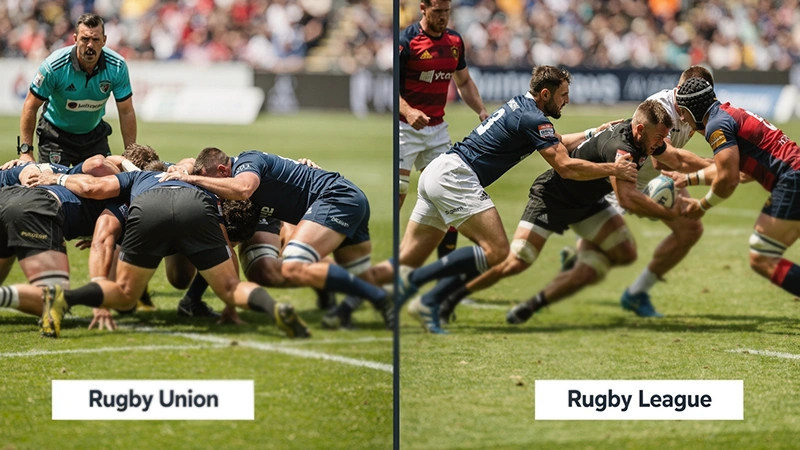
Rugby Union (15 players, contested scrums) vs Rugby League (13 players, faster gameplay)
Rugby Union is what most people picture when they think of rugby. Fifteen players per side, contested scrums, lineouts, rucks, and mauls. The possession game can be incredibly tactical, with teams maintaining the ball through multiple phases before creating a scoring opportunity. New Zealand, South Africa, Ireland, and France have dominated the international scene, while club competitions like the English Premiership and French Top 14 attract the best players from around the world.
Rugby League, by contrast, features thirteen players per side and a much faster, more streamlined game. After a tackle, the attacking team gets six attempts to advance the ball before possession changes. There are no contested scrums or lineouts, which means the ball is in play for longer and try-scoring tends to be more frequent. League is particularly popular in northern England, Australia, and parts of France, with the NRL in Australia being the premier professional competition.
Why does this matter for betting? The scoring patterns are completely different. Union matches often feature tight, low-scoring affairs decided by penalty kicks, especially at international level. League games typically see higher point totals and more tries. When you see an over/under line of 45.5 points, it means something very different depending on which code you are betting on.
The tactical complexity of Union also creates more variability in outcomes. A team that dominates territory and possession can still lose if they cannot convert pressure into points. In League, the more direct style of play means that superior teams tend to control matches more predictably. This affects how you should approach handicap betting in each code.
Team composition matters differently too. In Union, the impact of individual players can be harder to quantify because so much depends on set-piece execution and forward battles. Lose your starting tighthead prop, and your scrum could collapse entirely. League teams, with fewer players and less specialisation, can often absorb key absences more easily.
Weather and pitch conditions have a more pronounced effect on Union as well. A waterlogged pitch turns a fast-paced match into a forward-dominated slog where handling errors multiply. The smart rugby bettor adjusts their approach based on the forecast, particularly for winter matches in the Northern Hemisphere.
If you are going to specialise in rugby betting, pick one code and learn it thoroughly rather than spreading yourself thin across both. The bookmakers certainly know the differences, and casual bettors who treat Union and League as interchangeable are giving away value.
RugbyBettingTips · Calculator
Union vs League: Same Line, Different Bet
A total of 42.5 points means one thing in Union and something else entirely in League — different scoring, different try counts, different maths. Pick a code, set the match up, and see how the same total and handicap price out. Then check the mirror: what the identical line looks like in the other code.
Code
Favourite's superiorityClear favourite
Match profileBalanced
–
:
–
–
total points
Over 42.5
–
Fav −9.5 covers
–
Favourite wins
–
The same line in the other code
Union– · – pts avg
League– · – pts avg
Union & League tips, both codesHandicaps, totals and try-scorer value in our Telegram channel.Join
Points built from rugby scoring blocks — tries (5 Union / 4 League) with conversions, penalties (3 / 2) and drop goals — simulated per code, so totals and handicaps price differently. A simplified model for illustration, not betting advice · 18+ · Gambling can be addictive · BeGambleAware.org
Types of Rugby Bets Explained
The beautiful thing about rugby betting is the variety of markets available. You are not limited to simply picking a winner. Bookmakers offer dozens of different ways to wager on matches, and understanding each type helps you find value that others might miss.
Successful rugby betting requires thorough research and analysis of multiple markets
Match Winner (Moneyline)
Match Winner (Moneyline) is the most straightforward bet in rugby. You pick which team wins, collect if they do. Simple as that. What makes rugby interesting here is that draws are possible in some competitions but extremely rare. Most matches have a clear favourite and underdog reflected in the odds, and the physical nature of the sport means that favourites tend to win more reliably than in football. When New Zealand plays Canada, there is no mystery about the likely outcome.
Handicap Betting
Handicap Betting is where rugby really gets interesting. Because mismatches are common, especially in international rugby, bookmakers apply a points handicap to level the playing field. If Ireland is playing Italy and gets a minus 25 handicap, they need to win by more than 25 points for your bet to pay out. Italy plus 25 means they can lose by up to 24 points and still cover the spread.
The key to handicap betting is understanding why certain lines exist. Bookmakers set handicaps based on expected performance, but they also adjust for public sentiment. Popular teams often have inflated lines because casual bettors back them regardless of value. Finding spots where the handicap seems too generous or too harsh is how profitable rugby bettors operate.
Over/Under (Totals)
Over/Under (Totals) betting focuses on the combined score of both teams rather than who wins. The bookmaker sets a line, say 42.5 points, and you bet on whether the actual total will be higher or lower. This market rewards bettors who understand playing styles. Two defensive teams grinding it out in bad weather? The under looks attractive. Two attacking sides meeting on a dry track? Overs might be the play.
Try Scorer Markets
Try Scorer Markets offer some of the most exciting betting opportunities in rugby. You can bet on the first try scorer, last try scorer, anytime try scorer, or even specific players to score two or more. Wingers statistically score the most tries because they finish moves on the edges, but their odds often reflect this. Sometimes there is better value backing a number eight who scores from close range or a fullback who joins the line.
The tactical element here is crucial. Some teams create most of their tries through set plays from lineouts, favouring forwards. Others spread the ball wide at every opportunity, benefiting backs. Knowing how teams score helps you identify which players offer value in try scorer markets.
Half-Time/Full-Time
Half-Time/Full-Time betting combines two predictions: who leads at half-time and who wins at full-time. This is a harder market to crack but offers better odds as a result. Slow-starting teams that finish strongly, or quick starters that fade, create opportunities here. The six possible outcomes in a two-team match (excluding draws at half-time) mean you can find value when you spot patterns others miss.
Winning Margin
Winning Margin lets you bet on the exact points difference at full-time, usually grouped in ranges like 1-12 points, 13-24 points, or 25 plus. This market demands a strong view on how the match will unfold. Tight contests between evenly matched sides suggest small margins. Heavy favourites against weaker opposition point toward blowouts.
Player Props
Player Props have become increasingly popular as bookmakers expand their offerings. You might bet on a specific player to score a certain number of points, make a set number of tackles, or even receive a yellow card. These markets reward deep knowledge of individual players and how they perform in specific matchups.
Futures and Outright Betting
Futures and Outright Betting moves beyond individual matches to entire tournaments. Before the World Cup kicks off, you can bet on the eventual winner, top try scorer, or even which teams will reach the knockout stages. Futures often offer the best value before tournaments begin, when uncertainty is highest and odds are most generous.
The timing of futures bets matters considerably. As tournaments progress and the field narrows, odds on remaining contenders shorten dramatically. Locking in a selection before competition begins often delivers better long-term value than waiting for confirmation of form. Of course, this cuts both ways. Early injuries or unexpected pool stage exits can render pre-tournament bets worthless.
Accumulator Betting
Accumulator Betting deserves special mention because it tempts so many rugby bettors. Combining multiple selections into a single bet multiplies the odds together, creating potentially massive payouts from small stakes. The catch is that every selection must win. String together five favourites who each have 80 percent chances of winning, and your accumulator only has about a 33 percent chance of landing. The mathematics punish accumulators over time, yet their allure persists. Use them sparingly for entertainment rather than as a core strategy.
How Rugby Betting Odds Work
Understanding odds is not optional if you want to bet successfully. They tell you two essential things: how much you stand to win and, crucially, what probability the bookmaker assigns to each outcome. Grasping this relationship separates informed bettors from those just gambling blindly.
Decimal Odds
Decimal Odds are the most intuitive format and have become standard across most of Europe and Australia. The number shown represents your total return for every unit staked, including your original bet. Odds of 2.50 mean you get back 2.50 for every 1.00 wagered, a profit of 1.50. To calculate implied probability, divide 100 by the decimal odds. So 2.50 implies a 40 percent chance of that outcome occurring.
Fractional Odds
Fractional Odds remain popular in the UK and Ireland. Written as 5/2 or 3/1, the first number shows potential profit and the second shows stake required. Odds of 5/2 mean you profit 5 units for every 2 staked. Converting to implied probability requires dividing the denominator by the sum of both numbers. For 5/2, that is 2 divided by 7, giving roughly 28.5 percent.
American (Moneyline) Odds
American (Moneyline) Odds use positive and negative numbers. Positive numbers show how much you profit on a 100 unit stake. Plus 200 means 200 profit from 100 wagered. Negative numbers show how much you must stake to profit 100. Minus 150 means risking 150 to win 100. American odds dominate in the US market but appear less frequently elsewhere.
The real skill lies in spotting when bookmaker odds do not accurately reflect true probabilities. This concept, called finding value, is the foundation of profitable betting. If you believe Ireland has a 60 percent chance of beating France but the odds imply only a 50 percent chance, that is a value bet regardless of the actual outcome.
Bookmakers build a margin into their odds to ensure profit. In a two-outcome market with true 50/50 odds, both sides would be priced at 2.00 in a perfectly efficient market. Instead, you might see 1.90 on each, meaning the implied probabilities add up to more than 100 percent. This overround is how bookmakers make money. Lower-margin bookmakers offer better value over time.
Odds movement tells its own story. When significant money hits a selection, odds shorten. This might reflect injury news, team announcements, or simply sharp bettors who have identified value. Watching line movements before matches can reveal information that casual bettors miss.
Comparing odds across multiple bookmakers is essential. Different books have different opinions and different customers, creating price discrepancies. The few minutes spent checking several sites before placing a bet can add meaningful percentage points to your long-term returns.
Rugby Betting Strategies That Actually Work
Strategies that work in football or horse racing do not automatically translate to rugby. The sport has unique characteristics that demand tailored approaches. What follows are methods that successful rugby bettors actually use, not theoretical frameworks that sound clever but fail in practice.
Form Analysis Beyond the Scoreboard
Form Analysis Beyond the Scoreboard separates good bettors from average ones. Yes, checking recent results matters, but the score does not tell the whole story. A team might lose narrowly while dominating possession and territory, suggesting they were unlucky rather than outclassed. Conversely, a comfortable win against poor opposition reveals less than a hard-fought loss to a top side. Dig into match statistics, watch extended highlights, and understand why results happened.
Home Advantage is Real and Measurable
Home Advantage is Real and Measurable in rugby. Across all major competitions, home teams win more often than visitors. The effect is particularly strong in international rugby, where the partisan crowd, familiar conditions, and absence of travel fatigue combine powerfully. In the Six Nations, home wins have historically occurred at rates significantly above 50 percent. Factor this into your handicap analysis.
Player Availability Changes Everything
Player Availability Changes Everything in a sport as physically demanding as rugby. Unlike football where a team can lose a key player and barely miss them, rugby sides can transform based on who is available. The absence of a starting loosehead prop weakens the scrum. Missing your first-choice fly-half disrupts the entire attacking game. Before betting, always check team news and understand the significance of any changes.
Weather and Conditions Matter More Than You Think
Weather and Conditions Matter More Than You Think because rugby is played through winter in the Northern Hemisphere, often in driving rain and howling wind. Wet conditions increase handling errors, make kicking less reliable, and generally depress scoring. Heavy rain forecasts should push you toward unders in totals markets and caution on heavy favourites who might struggle to put the game away.
Tournament Phases Produce Different Rugby
Tournament Phases Produce Different Rugby and smart bettors adjust accordingly. Pool stage matches at the World Cup often feature experimental selections and conservative tactics from favourites preserving themselves for knockout rounds. The intensity increases dramatically in sudden-death situations, where tight, low-scoring affairs become more common as neither side wants to take unnecessary risks.
Bankroll Management is Not Boring
Bankroll Management is Not Boring despite what aggressive tipsters might suggest. Successful long-term betting requires preserving your capital through inevitable losing streaks. Staking between 1 and 5 percent of your total bankroll per bet protects you from ruin while allowing growth during winning periods. Chasing losses with bigger bets is the fastest route to an empty account.
Value Betting Over Prediction Accuracy
Value Betting Over Prediction Accuracy represents a mindset shift that transforms results. You do not need to correctly predict every match to profit. You need to find bets where the odds offered exceed the true probability of the outcome. Backing a team at odds implying 40 percent when you assess them at 50 percent is a good bet even if they lose. Over hundreds of bets, positive expected value compounds into profit.
Specialisation Beats Generalisation
Specialisation Beats Generalisation in rugby betting markets. Bookmakers dedicate serious resources to pricing major matches accurately. Finding edges means going deeper than they do in specific areas. Maybe you follow the United Rugby Championship closely and understand team dynamics others miss. Perhaps you specialise in first try scorer markets and have developed a model for identifying value. Whatever your niche, developing genuine expertise there will serve you better than shallow knowledge across everything.
The Contrarian Approach
The Contrarian Approach works particularly well in rugby because public sentiment skews betting lines. When a team wins impressively, casual bettors pile on for the next match regardless of circumstances. This inflates their odds and creates value on the opposition. The reverse happens after bad losses. Teams coming off embarrassing defeats often find themselves undervalued because public memory is short and emotional. Fading public opinion requires nerve, but the mathematics reward it over time.
Tracking Referee Tendencies
Tracking Referee Tendencies offers an edge that most bettors overlook entirely. Different referees have different styles. Some allow games to flow and rarely reach for cards. Others penalise heavily and keep tight control. When betting on markets like total points, total penalties, or card-related props, knowing which official is appointed matters. Rugby reference sites track individual referee statistics that reveal these patterns clearly.
Major Rugby Competitions to Bet On
The rugby calendar offers betting opportunities virtually year-round across multiple competitions and time zones. Understanding what makes each tournament distinctive helps you identify where your knowledge might give you an edge.
The Rugby World Cup represents the pinnacle of international rugby competition
The Rugby World Cup
The Rugby World Cup stands alone as the pinnacle of the sport. Held every four years, it brings together twenty teams across six weeks of pool stages and knockout rounds. For bettors, the World Cup offers both opportunities and challenges. Early pool matches can feature massive mismatches where finding handicap value proves difficult. But as the tournament progresses, the matches tighten and the betting gets more interesting. Historical patterns matter here. Host nations tend to overperform, while European sides have historically struggled in the Southern Hemisphere. The emotional intensity of knockout rugby also produces more conservative play, affecting totals markets.
The Six Nations Championship
The Six Nations Championship is European rugby at its finest. Every February and March, England, France, Ireland, Wales, Scotland, and Italy battle for supremacy across five rounds of fixtures. The round-robin format means every team plays each other once, with home advantage alternating year to year. This creates natural betting angles. Teams with favourable home draws often outperform their odds. The traditional rivalries add emotional stakes that can affect performance, for better or worse. France at home are a different proposition than France travelling to Dublin or Cardiff.
The Rugby Championship
The Rugby Championship pits the Southern Hemisphere giants against each other annually. New Zealand, South Africa, Australia, and Argentina compete in a home-and-away format that produces consistently high-quality rugby. The time zone differences mean these matches often kick off early in the morning for European bettors, but the quality rewards those willing to set an alarm. The dominant All Blacks have historically been underpriced in this competition, while Argentina at home in Buenos Aires can upset any opposition.
British and Irish Lions Tours
British and Irish Lions Tours occur every four years, alternating between South Africa, Australia, and New Zealand. These tours pit the best players from Britain and Ireland against the host nation in a three-Test series. The unique nature of Lions rugby, where players from rival clubs must quickly forge combinations, creates unpredictable early matches as combinations settle. By the Test series, the rugby typically intensifies into some of the most compelling contests the sport offers.
The English Premiership
The English Premiership is the strongest domestic league in Europe, featuring twelve clubs battling across a long season before playoffs determine the champion. The weekly fixtures provide regular betting opportunities, though the compressed schedule during international windows can see significantly weakened teams. Following squad depth and rotation patterns gives informed bettors an edge over those just looking at league tables.
The French Top 14
The French Top 14 matches the Premiership for talent thanks to wealthy club owners willing to spend heavily on foreign stars. French rugby is notoriously unpredictable, with teams capable of brilliant performances one week and baffling collapses the next. This volatility creates both opportunity and risk for bettors.
Super Rugby Pacific
Super Rugby Pacific showcases the fastest and most attacking rugby anywhere. Teams from New Zealand, Australia, Fiji, and the Pacific Islands compete in a competition where tries flow freely and point totals regularly exceed those in Northern Hemisphere leagues. For bettors who prefer attacking rugby and higher-scoring markets, Super Rugby offers ideal conditions.
Live Rugby Betting: In-Play Strategies
Live betting has transformed how people wager on rugby. Instead of locking in your bets before kick-off and watching helplessly, you can now react to what you see on the pitch. This creates opportunities that did not exist a decade ago, but it also demands a different skill set.
The key to successful live betting is understanding how bookmakers adjust odds during matches. Algorithms respond to obvious events like tries and cards, but they cannot assess everything. If you notice one team dominating territory and creating chances without scoring, the live odds might not reflect the pressure being applied. That is when informed bettors strike.
Live betting requires real-time monitoring and quick decision-making
Momentum Shifts
Momentum Shifts are your best friend in live rugby betting. Unlike football where one goal can kill a game, rugby features constant momentum swings. A team trailing by fourteen points at half-time can storm back with two quick tries after the break. If you can read these shifts before the algorithms catch up, value opportunities appear.
Watch for the signs. A team gaining the upper hand at scrum time will start winning penalties and forcing errors. Sustained pressure in the opposition twenty-two usually converts to points eventually. Numerical advantages from yellow cards create temporary windows where the odds overreact to the actual impact.
Weather Changes During Matches
Weather Changes During Matches offer another edge. If heavy rain starts falling in the second half, the game will tighten up. Players become cautious, handling errors increase, and scoring slows. If you spot changing conditions before the bookmakers adjust totals lines, you can find value on unders.
Fatigue Factors
Fatigue Factors become visible to the trained eye. Rugby is an incredibly demanding sport, and tired teams make mistakes. By the sixty-minute mark, you can see which pack is dominant in the collisions and which backs are struggling to maintain intensity. Teams built on fitness tend to finish strongly, while those relying on early dominance often fade.
Reading Team Body Language
Reading Team Body Language sounds abstract but matters. A team frustrated by the referee, arguing among themselves, or visibly deflated after conceding will often underperform their remaining potential. Confidence breeds performance in rugby, and you can see it in how teams carry themselves between plays.
The technical side of live betting requires preparation. Have accounts with multiple bookmakers so you can quickly find the best available odds. Use streaming services to watch matches in real-time rather than relying on delayed feeds. Understand the cash-out options available so you can lock in profits or minimize losses as situations develop.
The biggest danger in live betting is overactivity. The constant availability of markets tempts you to bet impulsively rather than waiting for genuine value. Discipline matters more in-play than pre-match because the opportunities come thick and fast. Have a plan for which scenarios you are looking for, and ignore everything else.
Rugby Betting Tips from the Experts
The professionals who bet on rugby for a living share certain habits and approaches. These are not secret formulas but rather disciplined practices that compound into success over time.
Keep Detailed Records
Keep Detailed Records of every bet you place. Date, match, market, odds, stake, and result. Without data, you cannot identify what works and what does not. Most bettors overestimate their success because they remember winners and forget losers. Cold, hard numbers reveal the truth. Review your records monthly and look for patterns. Maybe you consistently find value in try scorer markets but lose money on handicaps. That information should guide where you focus your attention.
Develop a Pre-Match Routine
Develop a Pre-Match Routine that ensures you consider all relevant factors before betting. Check team news for late changes. Review head-to-head records for relevant patterns. Consider the context: is this a dead rubber or a must-win? What are the conditions expected to be? Having a checklist prevents you from missing obvious factors that affect outcomes.
Follow Quality Sources
Follow Quality Sources rather than random social media tipsters. Understanding what the rugby press is saying about team selections, injury concerns, and tactical approaches gives you context that pure statistics miss. The best information often comes from beat reporters who follow specific teams closely and understand internal dynamics.
Learn When Not to Bet
Learn When Not to Bet because many matches offer no value whatsoever. When two evenly matched teams play a high-profile fixture, the betting markets will be razor-sharp. Finding an edge in these spots is nearly impossible. But a midweek domestic league match with rotation and travel factors? The bookmakers cannot dedicate the same resources, and opportunities appear.
Understand Your Own Biases
Understand Your Own Biases because everyone has them. Supporting a team emotionally affects your judgement about their chances. Recency bias makes you overweight recent results. Confirmation bias leads you to seek out information supporting positions you already hold. Recognizing these tendencies helps you counteract them.
Start Small and Build Gradually
Start Small and Build Gradually regardless of how confident you feel. New approaches need testing with minimal stakes before you trust them with significant money. A strategy that looks brilliant in theory might fail in practice. Give yourself room to learn without devastating your bankroll.
Timing Your Bets Strategically
Timing Your Bets Strategically can add meaningful value over time. Odds on weekend matches are sharpest by Friday evening when most money has been placed. Early in the week, you might find softer lines before markets adjust. For tournament outrights, betting before competition begins often delivers better prices than waiting for form to emerge. The trade-off is information, but uncertainty cuts both ways.
Avoid the Trap of Favourite Bias
Avoid the Trap of Favourite Bias that catches so many rugby bettors. Big teams attract big money regardless of value. When New Zealand, Ireland, or South Africa play lesser opposition, the odds on favourites compress because casual bettors pile on. This creates systematic value on underdogs receiving generous handicaps. You do not need underdogs to win outright, just cover the spread.
Responsible Rugby Betting
Betting should add excitement to watching rugby, not create stress or financial hardship. Keeping it enjoyable requires honest self-assessment and clear boundaries that you actually enforce.
Responsible betting keeps the focus on entertainment and enjoyment
Set a budget for betting that you can genuinely afford to lose. This is not money earmarked for rent, bills, or other obligations. It is entertainment spending, like what you might use for concerts or dining out. Once you frame it this way, losing a bet feels less consequential. The moment betting money starts competing with essential expenses, you have crossed a line that needs addressing.
Never chase losses by increasing stakes after a bad run. This is how recreational betting turns into a problem. Accept that losing is part of betting. Even the best bettors have losing weeks, losing months, sometimes losing years. What matters is the long-term trend, not individual results. The urge to immediately win back losses clouds judgement and leads to poor decisions.
Take breaks from betting regularly. Stepping away for a week or two helps reset your perspective and prevents the activity from becoming compulsive. When you return, you often see things more clearly. The matches will still be there when you come back.
If betting stops being fun, that is a warning sign. If you find yourself betting to recover losses, lying about how much you bet, or feeling anxious about outcomes, seek help immediately. Organizations like GambleAware, Gamblers Anonymous, and the National Council on Problem Gambling offer confidential support and resources. There is no shame in asking for assistance.
Rugby Betting Guide Summary and How to Start Betting on Rugby
Rugby betting rewards those who approach it with knowledge, discipline, and patience. The sport offers a fascinating betting landscape where understanding matters, and where casual observers consistently give away value to those who do the work.
We have covered a lot of ground in this guide. The fundamental differences between Union and League that affect everything from scoring patterns to handicap lines. The full range of betting markets available and how to approach each one. How odds work and, more importantly, how to identify when they represent value. Strategies that account for rugby's unique characteristics. The major competitions that fill the calendar and the quirks that make each distinctive. Live betting approaches that let you react to what you see on the pitch. And the disciplined habits that separate successful bettors from everyone else.
But knowledge alone does not produce results. You need to apply it, track your outcomes, learn from mistakes, and continuously refine your approach. The best rugby bettors never stop improving because the sport keeps evolving and the markets keep adapting.
Start small. Focus on one competition or one market until you develop genuine expertise. Keep records and review them honestly. Find the niches where your knowledge exceeds what the bookmakers and other bettors bring to the table.
Most importantly, remember why you started betting on rugby in the first place. The thrill of watching a match with something riding on it. The satisfaction of a well-researched bet paying off. The deeper engagement with a sport you love. Keep that enjoyment at the centre of your approach, and the results will follow.
Frequently Asked Questions
How do rugby betting odds work?
Rugby betting odds show both your potential payout and the implied probability of an outcome. Decimal odds of 2.50 mean you receive 2.50 back for every 1.00 staked (including your original bet), implying a 40 percent chance. Fractional odds of 5/2 mean 5 profit for every 2 staked, roughly 28.5 percent probability. American odds use plus and minus signs, where plus 200 means 200 profit on a 100 stake and minus 150 means staking 150 to profit 100. Understanding these formats helps you compare prices across bookmakers and spot when odds offer genuine value relative to your own assessment of likely outcomes.
What is the best type of bet for rugby beginners?
Match winner bets offer the simplest entry point because you only need to predict which team wins. Once comfortable, handicap betting opens up more opportunities by applying points adjustments that level mismatched contests. Totals markets, betting on whether combined scores go over or under a set line, reward understanding of team playing styles without requiring you to pick a winner. Try scorer bets add excitement but demand deeper knowledge of individual players. Build your skills gradually, starting with straightforward markets before progressing to more complex options where mistakes cost more.
Can I bet on rugby legally in the United States?
Yes, rugby betting is legal in US states with regulated sports betting following the 2018 Supreme Court decision that struck down the federal prohibition. Over thirty states now permit legal online sports betting through licensed operators like FanDuel, DraftKings, BetMGM, and Caesars. These platforms offer markets on major rugby events including the World Cup, Six Nations, and prominent domestic leagues. Availability varies by state, so check local regulations before betting. Licensed sportsbooks offer consumer protections that offshore alternatives cannot match, making legal options the safer choice wherever available.