

Winning at rugby betting over the long term requires more than luck and more than simply knowing the sport. It demands a structured approach that accounts for the unique characteristics of rugby while avoiding the emotional traps that derail most bettors. The punters who consistently profit from rugby betting share certain habits, certain analytical frameworks, and certain ways of thinking that separate them from the recreational crowd throwing money at their favourite teams.
Strategy in rugby betting means having a repeatable process for identifying value, managing risk, and making decisions that maximise expected returns rather than chasing excitement. It means understanding why you are placing each bet before you place it, not rationalising decisions after the fact. Most importantly, it means accepting that no strategy guarantees wins on individual bets but that sound strategy virtually guarantees better results over hundreds of wagers.
What follows represents hard-won knowledge from studying how successful rugby bettors operate. These are not theoretical concepts dreamed up in isolation but practical approaches that work in real markets against real bookmakers. Some will feel obvious. Others might challenge assumptions you have carried for years. All of them contribute to a coherent framework for approaching rugby betting as a serious endeavour rather than casual entertainment.
The rugby betting market is neither perfectly efficient nor hopelessly random. Edges exist for those willing to work for them. Finding those edges consistently requires combining sports knowledge with betting discipline in ways that most punters never attempt. That combination is exactly what genuine strategy provides.
Analysing Form Beyond Surface Results
Results matter in rugby, but they do not tell the whole story. A team might lose by three points while dominating every meaningful statistic. Another team might win comfortably against weak opposition without revealing anything useful about their true level. Smart bettors dig beneath the scoreboard to understand why outcomes occurred, not just what those outcomes were.

Possession and territory percentages offer insight into which team controlled the match. A side that holds the ball for 60 percent of the game and spends most of their time in the opposition half typically deserved better than a narrow loss. The scoreboard disagreed on that particular day, but the underlying performance suggests positive regression is coming. Bookmakers price based on results first and underlying metrics second, creating opportunities for those who look deeper.
Carrying this analysis forward requires context. Did the dominant side lose because of a single defensive error or was there a systematic problem? Were key players missing who would have converted pressure into points? Did weather conditions neutralise their usual advantages? Each piece of context refines your assessment of what the result actually means for future matches.
Watching extended highlights or full match replays whenever possible beats reading statistical summaries. You see things that numbers cannot capture: defensive organisation under pressure, attacking ambition when ahead, body language when things go wrong. These qualitative factors influence future performance but rarely appear in public data sources that inform casual betting.
The recency of results matters too. Rugby form tends to be streaky, with teams riding momentum or struggling through troughs. A win from two weeks ago tells you more than a win from two months ago. However, the nature of the rugby calendar means that international breaks, European competition, and domestic fixtures create variable gaps between meaningful data points. Adjusting for this context prevents over-weighting stale information.
Opposition quality must always factor into form analysis. Beating a relegation-threatened side means less than competing closely with a title contender. Creating an adjusted assessment of performance that accounts for the level faced produces more predictive conclusions than treating all results equally. This seems obvious yet most bettors fail to implement it systematically.
The Reality of Home Advantage
Home advantage in rugby is substantial and measurable. Across all major competitions, teams playing at their own ground win significantly more often than visitors. This effect persists after controlling for team quality, meaning it represents a genuine factor rather than simply stronger teams having nicer stadiums.
The mechanisms behind home advantage are well understood. Crowd support affects referee decisions at the margins and lifts players during crucial moments. Familiar surroundings reduce anxiety and allow teams to execute patterns they have rehearsed countless times. Absence of travel means fresher legs and more focused preparation. In combination, these factors produce meaningful performance differentials.

International rugby shows particularly strong home advantage because fans create atmospheres that genuinely intimidate visitors. The Aviva Stadium, Twickenham, the Principality Stadium, and Stade de France become fortresses during Six Nations matches. Southern Hemisphere grounds present equally daunting environments for touring sides. Bookmakers know this and price accordingly, but they do not always weight home advantage correctly for specific matchups.
Certain teams derive more benefit from playing at home than others. Welsh rugby in Cardiff carries emotional intensity that opponents struggle to match. French teams at home can produce performances utterly disconnected from their away form. Identifying teams whose home advantage exceeds what the market prices offers consistent value across a season.
The reverse also applies. Some teams travel well because their playing style suits away conditions or their experienced players handle hostile environments comfortably. New Zealand have historically performed almost as well on the road as at home because their team culture emphasises mental fortitude. Recognising these patterns allows you to adjust from generic home advantage assumptions.
Stadium-specific factors occasionally create additional edges. Altitude affects teams visiting South African grounds. Coastal wind at Wellington’s ground influences kicking games. Artificial surfaces at some club grounds benefit teams accustomed to them while disrupting visitors. These granular considerations rarely appear in mainstream analysis but can influence match outcomes.
Why Player Availability Changes Everything
Rugby squads contain relatively few players compared to football, and the physical nature of the sport means injuries happen constantly. The availability of specific individuals can transform a team’s prospects in ways that ripple through every betting market.
Front row availability matters enormously in rugby union because the scrum provides a platform for everything else. Lose your starting loosehead and tighthead props, and suddenly your scrum becomes a weakness rather than a weapon. Penalties mount, field position suffers, and confidence drains from the entire forward pack. Bookmakers adjust for obvious absences but often underweight the compounding effects of multiple changes.
The fly-half position concentrates influence more than any other in rugby. This player controls tactical direction, executes goal kicks, and often determines whether scoring pressure converts to points. A team missing their first-choice number ten presents a fundamentally different proposition than the same side at full strength. Backup options may be competent but rarely match the decision-making and kicking accuracy of established starters.
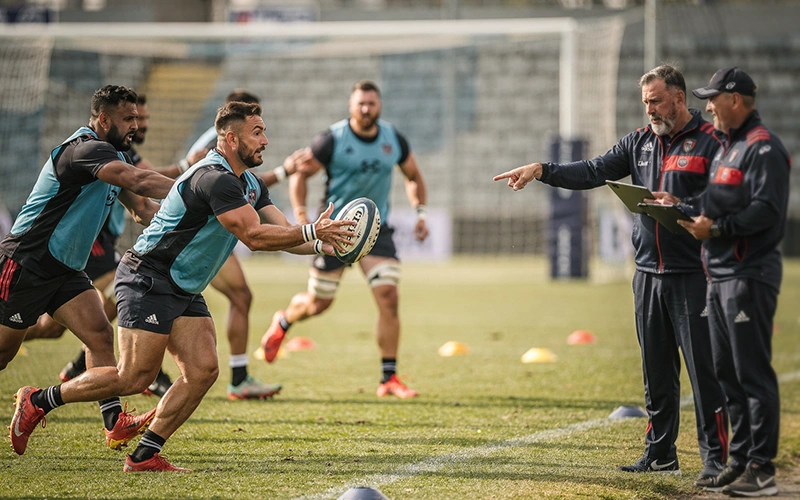
Understanding depth charts helps you assess the true impact of absences. Some teams have quality replacement options who barely represent a downgrade. Others rely heavily on specific individuals with significant drop-offs behind them. Following team news throughout the week and knowing squad compositions gives you an edge when late changes occur.
International windows create predictable disruption for domestic leagues. Clubs lose their best players to national duty, fielding weakened sides that bookmakers may not fully account for in their pricing. The weeks immediately following international commitments also see fatigue effects as players return from intense test matches to resume club responsibilities.
Injuries often cluster because rugby’s physical demands mean one player’s absence increases loads on others. A tight forward group carrying extra workload becomes more likely to suffer further casualties. Recognising when a team is entering an injury spiral versus recovering from temporary setbacks affects how you view their medium-term prospects.
Weather as a Betting Factor
Rugby is an outdoor winter sport in the Northern Hemisphere, played through conditions that would cancel fixtures in more delicate sports. Rain, wind, and cold fundamentally change how matches unfold, creating betting angles that weather-agnostic punters ignore entirely.
Wet conditions increase handling errors exponentially. The ball becomes slippery, passes harder to catch cleanly, and ambitious attacking plays break down more frequently. This typically suppresses scoring and favours teams built on forward dominance rather than backline flair. Totals markets respond to these dynamics, but often the adjustment lags behind what conditions actually warrant.

Wind affects kicking games more than most bettors appreciate. Goal kicking becomes unreliable in strong gusts, and box kicks that normally gain territory turn into gambling exercises. Teams that rely heavily on set-piece execution and territory-based tactics struggle when conditions prevent their usual patterns. Watching weather forecasts in the days before kick-off and adjusting your positions accordingly gives you an edge.
Pitch condition compounds weather effects. A ground that has hosted multiple fixtures becomes churned up, especially in the goalmouth areas. Scrum resets happen more frequently on torn-up surfaces. Players lose footing at crucial moments. These accumulated effects favour certain playing styles and penalise others in ways that pure form analysis might miss.
Conversely, dry tracks with firm ground favour expansive rugby. Ball movement through the hands becomes more reliable, and pacy backlines exploit opportunities that disappear in mud. Teams built for these conditions often outperform expectations when blessed with favourable weather, while their struggle in poor conditions explains inconsistent form throughout winter.
Summer rugby in the Southern Hemisphere presents different considerations. Super Rugby conditions tend toward dry and fast, producing higher-scoring matches as a baseline. The contrast with Northern Hemisphere winter rugby means strategy that works for Premiership betting may need significant adjustment for Rugby Championship markets.
The Value Betting Mindset
Everything in successful rugby betting ultimately comes back to value. You profit not by picking winners most often but by finding situations where the odds exceed the true probability of an outcome. This distinction trips up most bettors because our brains reward being right rather than being profitable.
Value betting requires comfort with losing bets that were nonetheless good decisions. If you back an underdog at odds implying 25 percent probability when you assess them at 35 percent, you have found value. That team will still lose most of the time, and each loss feels like a mistake. But over many such bets, the excess probability compounds into profit. Internalising this truth changes how you evaluate your own performance.
Developing probability estimates independent of market prices represents the core skill. This means doing your analysis before looking at odds, not after. If you always start with what the bookmaker thinks, anchoring bias corrupts your own assessment. You end up rationalising the market view rather than challenging it. Genuine edge comes from disagreement, not confirmation.
Not every match offers value. Sometimes the market is simply correct, and no betting opportunity exists. Discipline means accepting these situations and passing rather than forcing action. The recreational bettor feels compelled to bet on every match they watch. The strategic bettor recognises that patience produces better returns than activity.
Tracking your results in ways that reveal whether you are finding value matters more than tracking wins and losses. Compare your predicted probabilities to actual outcomes over hundreds of bets. If your 60 percent predictions win about 60 percent of the time, your calibration is accurate. If your assessments prove consistently optimistic or pessimistic, adjustment is needed. This feedback loop drives improvement in ways that win percentage never can.
Managing Your Bankroll Intelligently
Strategy extends beyond pick selection to how you stake each bet. Even excellent value identification fails if poor bankroll management wipes you out before the long-term edge materialises. Discipline in staking separates those who survive losing runs from those who blow up their accounts.
Percentage-based staking keeps your exposure proportional to your bankroll. Betting 2 percent of your total funds on each wager means a losing streak hurts but does not devastate. As your bankroll grows through winning periods, your actual stake sizes increase automatically. As it shrinks during losing spells, your stakes decrease to protect the remaining capital. This automatic adjustment provides crucial protection.

Fixed unit betting offers simplicity at the cost of efficiency. You designate a single stake amount and use it for every bet regardless of bankroll size. This works fine for recreational bettors but leaves value on the table compared to percentage-based approaches. As your bankroll grows, fixed stakes become proportionally smaller and less impactful.
Varying stakes based on confidence level introduces additional complexity but can enhance returns. Larger bets on higher-confidence situations and smaller bets on speculative positions theoretically optimises outcomes. In practice, confidence calibration is difficult. Bettors tend to feel most confident on bets that represent poor value because those selections seem likely to win. Unless your confidence genuinely correlates with value, varying stakes may hurt rather than help.
The concept of expected value guides optimal staking. If a bet has 10 percent expected value based on your probability assessment versus the odds, it deserves larger stakes than a bet with 2 percent expected value. Kelly Criterion and related formulas formalise this logic, but full Kelly staking proves too aggressive for most bettors and produces unacceptable volatility. Fractional Kelly approaches, betting a quarter or half of the formula’s recommendation, provide a more stable path.
Never bet money you cannot afford to lose. This cliche bears repeating because violating it corrupts every aspect of your decision-making. Desperate bettors chase losses, take excessive risks, and make emotional choices that destroy any strategic edge. Your betting bankroll should be money you can lose entirely without affecting your life. If that is not true, reduce your stakes until it is.
The Power of Specialisation
Rugby betting markets span multiple competitions, bet types, and time zones. Attempting to find edge across all of them dilutes your efforts and likely produces mediocre results everywhere. Specialisation allows depth of knowledge that generates genuine advantage in specific areas.
Choosing a competition to focus on makes sense for most bettors. Maybe you follow the English Premiership closely because you attend matches and understand team dynamics in ways that casual observers miss. Perhaps you have connections to French rugby that provide insight into Top 14 proceedings. Whatever your natural area of interest, developing genuine expertise there produces better returns than surface-level knowledge across many leagues.
Market specialisation offers an alternative path. Instead of focusing on one competition, you might specialise in handicap betting across multiple leagues. Deep understanding of spread dynamics, line movement patterns, and where bookmakers consistently misprice handicaps becomes your edge. This approach requires more data analysis and less sport-specific knowledge.
Try scorer markets reward specialists who track individual player tendencies obsessively. Understanding which wingers actually finish moves versus which ones look dangerous without scoring, knowing which number eights have been moved to blindside flanker and lost their close-range opportunities, recognising when a fullback is being used in more attacking positions than usual. This granular player knowledge rarely appears in mainstream analysis.
Live betting specialists develop pattern recognition for in-game situations that others miss. They know when a team trailing at half-time in certain conditions typically mounts comebacks, when early tries against a particular opponent trigger defensive collapses, when weather deterioration mid-match creates scoring droughts. Real-time decision-making in live markets demands rapid processing that improves with focused practice.
Whatever specialisation you choose, commit to it seriously. Half-hearted expertise in multiple areas produces worse results than genuine depth in one. The time invested in understanding nuances, tracking relevant data, and developing informed views compounds into sustainable edge that general knowledge cannot match.
Adapting Strategy for Different Contexts
Rugby betting encompasses tournament football and league campaigns, international weekends and club competitions, knockout matches and dead rubbers. Each context demands strategic adjustments that cookie-cutter approaches ignore.
Tournament betting creates unique dynamics. Pool stage matches at World Cups often feature conservative approaches from favourites protecting themselves for knockout rounds. Teams with qualification already secured may rotate heavily, creating value on supposedly weaker opponents. Understanding where each team sits in their tournament journey affects how you assess match importance and likely approaches.
Knockout matches intensify everything. Both teams know that losing eliminates them, producing tighter, lower-scoring affairs than the same fixture might produce in a group stage. Risk aversion increases because mistakes cannot be recovered. Totals markets should reflect this intensity, but casual money often underestimates how much knockout pressure suppresses scoring.
Domestic league contexts vary throughout the season. Early matches carry less pressure and feature experimental lineups as teams find their form. Mid-season league positions create urgency for some teams while others enjoy comfortable situations. End-of-season fixtures range from meaningless to career-defining depending on what is at stake for each side. Reading these contexts correctly identifies when teams will perform above or below their normal level.
International breaks disrupt domestic leagues but create their own betting opportunities. National teams bringing together players from various clubs need time to establish combinations, making early matches in test windows less reliable than late ones. Teams with multiple players on national duty face disrupted preparation for their next club fixture. Understanding these rhythms helps you find value that context-blind analysis misses.
Building Sustainable Success
Long-term profitable rugby betting results from combining multiple edges rather than relying on any single factor. Form analysis plus home advantage consideration plus weather adjustment plus value identification plus disciplined staking creates a framework that compounds advantages over time.
Record keeping enables improvement. Track every bet with sufficient detail to analyse what works and what fails. Which competitions produce profits? Which bet types show consistent edge? Which factors in your analysis correlate with successful outcomes? Without data, you cannot answer these questions honestly. With data, patterns emerge that guide strategic refinement.
Emotional control underpins everything else. Losing streaks happen to everyone, including the best bettors operating the soundest strategies. How you respond determines whether temporary setbacks become permanent problems. Chasing losses, abandoning strategy in frustration, or betting larger to recover faster are all paths to disaster. Trusting your process through adversity separates survivors from casualties.
Continuous learning keeps you ahead of markets that constantly evolve. Bookmakers improve their pricing models. Other bettors identify edges you previously exploited, compressing available value. New data sources and analytical tools create opportunities for those who adopt them first. Complacency leads to declining results. Curiosity and adaptation maintain edge over time.
Rugby betting rewards those who approach it seriously while punishing those who rely on intuition and hope. Strategy provides the framework for serious engagement. Within that framework, your knowledge of the sport, your analytical skills, and your emotional discipline combine to produce results. The potential for consistent profitability exists for those willing to do the work. Whether you become one of them depends entirely on the choices you make from here.
