

Numbers tell stories in rugby betting, and learning to read them separates profitable bettors from those who simply hope for the best. Every time you look at a betting market, you see odds attached to each possible outcome. These numbers might seem arbitrary at first glance, but they contain crucial information about probability, potential profit, and where bookmakers think the smart money should go.
The thing about odds is that they serve two masters simultaneously. For the bookmaker, odds represent a pricing mechanism designed to balance their books and guarantee profit regardless of outcome. For you as a bettor, those same numbers reveal what the market believes about each team’s chances and, more importantly, where you might find opportunities that others have missed.
Understanding odds deeply transforms your entire approach to betting. Instead of picking teams based on gut feeling or following tipsters blindly, you start evaluating whether the price offered actually represents good value. A strong favourite might be a terrible bet if the odds are too short. A struggling underdog might offer genuine value if the market has overreacted to recent poor form. None of this analysis becomes possible until you truly understand what those numbers mean and how to interpret them.
This guide breaks down everything you need to know about rugby betting odds. We will cover the three major formats you will encounter, show you exactly how to calculate potential winnings, and explain how to spot value that bookmakers would rather you missed. By the end, you will look at odds completely differently than you do now.
What Exactly Are Rugby Betting Odds
At their core, betting odds express two related pieces of information. First, they tell you how much you stand to win relative to your stake if your bet succeeds. Second, they reveal the implied probability that the bookmaker assigns to that outcome occurring. Understanding both aspects matters because profitable betting requires finding situations where your assessment of probability differs meaningfully from what the odds suggest.
Think of odds as a translation of probability into a price. If a coin flip has a 50 percent chance of landing heads, fair odds would pay even money, doubling your stake on a win. But bookmakers do not offer fair odds because they need to make money. Instead, they shade the probabilities slightly in their favour, paying out less than a true reflection of the underlying chances would justify.

In rugby specifically, odds fluctuate based on numerous factors. Team news affects them as lineups become confirmed. Historical performance matters because bookmakers know that certain matchups produce predictable patterns. Public sentiment plays a role too, with popular teams often carrying shorter odds than their true chances warrant because casual bettors back them regardless of value.
The three main formats for displaying odds are decimal, fractional, and American. Each presents the same underlying information in a different way. Which format you encounter depends largely on where you are betting and which bookmaker you use. European and Australian books tend toward decimal odds. British and Irish bookmakers traditionally use fractional odds. American sportsbooks naturally default to their namesake format. Learning to read all three gives you flexibility to shop for the best prices across different platforms.
Decimal Odds and How They Work
Decimal odds have become the global standard for good reason. They are intuitive, easy to calculate with, and immediately show your total return rather than just profit. When you see decimal odds of 2.50, that number represents exactly what you get back for every unit staked if your bet wins, including your original stake.
The calculation could not be simpler. Multiply your stake by the decimal odds to find your total return. A ten pound bet at 2.50 returns twenty-five pounds if successful. That return includes your original ten pound stake plus fifteen pounds profit. No mental gymnastics required, just straightforward multiplication.
Converting decimal odds to implied probability helps you understand what the bookmaker thinks about each outcome. Divide 100 by the decimal odds to get the implied percentage chance. For odds of 2.50, that means 100 divided by 2.50, giving you 40 percent. The bookmaker is essentially saying this outcome has a 40 percent chance of occurring based on their pricing.
Lower decimal odds indicate higher implied probability. Odds of 1.25 suggest an 80 percent chance, meaning a heavy favourite. Higher decimal odds indicate lower probability. Odds of 5.00 imply just a 20 percent chance, marking a significant underdog. The relationship is inverse and consistent, making it easy to quickly assess where teams stand in the market’s eyes.
One advantage of decimal odds becomes apparent when comparing prices across bookmakers. The differences stand out clearly because the numbers directly reflect your return. If one book offers 2.50 and another offers 2.60 on the same selection, you immediately see that the second book pays better. Over time, consistently taking the best available decimal odds compounds into meaningful additional profit.
Rugby betting often features decimal odds ranging from around 1.05 for overwhelming favourites to 20.00 or higher for extreme underdogs in try scorer or outright markets. International matches between top nations typically see odds between 1.50 and 3.00 for each side, reflecting the competitive nature of test rugby. Handicap markets tighten these ranges, pushing both sides closer to 1.90 or thereabouts as the bookmaker levels the playing field with a points adjustment.
When you are starting out with rugby betting, decimal odds offer the easiest path to understanding what your money will do. The transparency of the format means fewer mistakes and clearer comparisons. Many experienced bettors who grew up with fractional odds have switched to decimal simply because the mathematics is cleaner.
See also live rugby betting.
Understanding Fractional Odds
Fractional odds remain deeply embedded in British and Irish betting culture. Walk into any high street bookmaker and you will see them displayed prominently. While they might look more complicated than decimal odds at first, they actually communicate something quite direct: how much profit you stand to make relative to your stake.
The format presents two numbers separated by a slash or hyphen. The first number represents potential profit and the second represents the stake required. Odds of 5/2 mean you profit five units for every two units staked. If you bet ten pounds at 5/2, you profit twenty-five pounds and receive thirty-five pounds back in total including your stake.
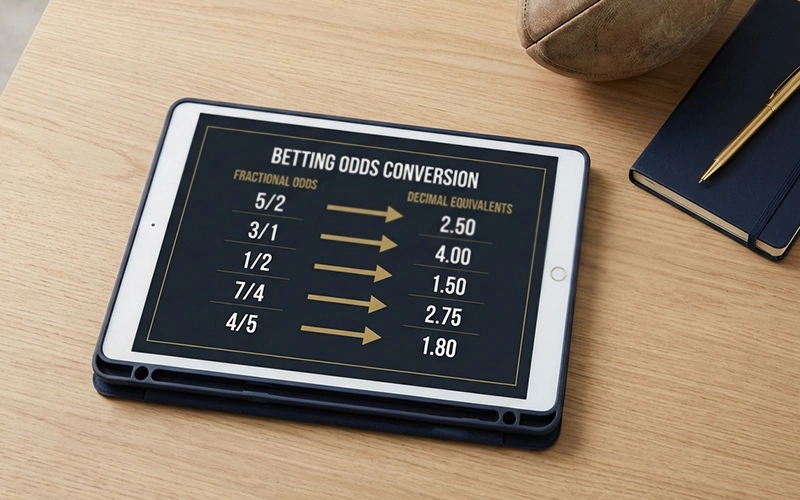
Some fractional odds are simpler to grasp than others. Odds of 2/1 mean you double your stake in profit. Evens, written as 1/1, means profit equals stake. Odds-on favourites show the second number larger than the first, like 1/2, meaning you must stake two pounds to profit one pound. These shorter prices indicate heavy favourites in the market.
Calculating implied probability from fractional odds requires a slightly different formula. Divide the second number by the sum of both numbers, then multiply by 100. For odds of 5/2, that means 2 divided by 7, giving roughly 28.6 percent implied probability. For evens at 1/1, it becomes 1 divided by 2, giving 50 percent.
The traditional nature of fractional odds means certain numbers appear more commonly than others. You will frequently encounter 6/4, 9/4, 11/4, 7/2, 5/1, and 10/1 because these represent clean fractions that bookmakers have used for generations. Understanding these common prices helps you quickly gauge where a selection sits in the market without needing to calculate every time.
One quirk of fractional odds that trips up newcomers is odds-against versus odds-on. When the first number exceeds the second, like 3/1, you are betting on an underdog who will return more profit than your stake if successful. When the second number exceeds the first, like 1/3, you are betting on a favourite where you risk more than you stand to profit. The higher the second number relative to the first, the heavier the favourite.
In rugby union betting, fractional odds often appear for outright tournament markets and match betting on British and Irish bookmakers. The Six Nations generates significant fractional odds pricing because of its traditional place in British sporting culture. You might see Ireland at 6/4 to win the championship or England at 9/2 as second favourites, prices that feel natural to bettors raised on this format.
American Odds and Their Logic
American odds use positive and negative numbers to distinguish favourites from underdogs, and their format takes some adjustment for bettors raised on other systems. Once you understand the underlying logic, though, they become as readable as any other format.
Positive American odds tell you how much profit you make on a 100 unit stake. Odds of +200 mean a successful hundred dollar bet returns two hundred dollars profit plus your original stake. The higher the positive number, the bigger the underdog and the larger your potential profit. Odds of +500 pay five times your stake in profit, while +150 pays one and a half times.
Negative American odds flip the question around. They tell you how much you must stake to profit 100 units. Odds of -150 mean you need to risk 150 dollars to profit 100 dollars. The more negative the number, the heavier the favourite and the more you must risk to achieve a meaningful return. Odds of -300 require a three hundred dollar stake to profit one hundred.
Converting to implied probability follows specific formulas depending on whether the odds are positive or negative. For positive odds, divide 100 by the odds plus 100, then multiply by 100. So +200 becomes 100 divided by 300, giving roughly 33.3 percent. For negative odds, divide the absolute value of the odds by itself plus 100, then multiply by 100. So -150 becomes 150 divided by 250, giving 60 percent.
American odds dominate the US sports betting market, which means they appear prominently on major platforms like FanDuel, DraftKings, and BetMGM. With rugby betting growing in America following the sport’s increased visibility, more bettors encounter these odds when wagering on the World Cup or Six Nations through domestic books.
The format excels at immediately showing you whether you are backing a favourite or underdog. Negative means favourite, positive means underdog. The magnitude of the number indicates how strong that designation is. A -500 favourite is considered much more likely to win than a -120 favourite. A +300 underdog has better perceived chances than a +700 underdog.
One adjustment for bettors coming from decimal or fractional odds involves recognising equivalent prices. Decimal odds of 2.00 equal American odds of +100 and fractional odds of evens. This represents the break-even point where neither side is favoured in terms of the odds structure. From this baseline, you can mentally calibrate other prices in the American format.
How to Calculate Your Potential Winnings
Knowing exactly what you stand to win before placing any bet should be non-negotiable. Yet plenty of bettors click through their selections without truly understanding their potential returns. Taking thirty seconds to run the numbers prevents surprises and helps you stake appropriately for the risk involved.

For decimal odds, multiplication handles everything. Stake times odds equals total return. A twenty pound bet at 3.40 returns sixty-eight pounds. Your profit is the return minus your original stake, so forty-eight pounds in this case. This calculation works for any stake and any decimal price you encounter.
Fractional odds require separating the fraction into its components. Multiply your stake by the top number, then divide by the bottom number to find your profit. Add back your original stake for total returns. A twenty pound bet at 9/4 means twenty times nine divided by four, giving forty-five pounds profit. Add the original twenty for sixty-five pounds total.
American odds calculations depend on whether the number is positive or negative. For positive odds, multiply your stake by the odds divided by 100. A twenty dollar bet at +175 means twenty times 1.75, giving thirty-five dollars profit. For negative odds, divide your stake by the odds divided by 100. A twenty dollar bet at -140 means twenty divided by 1.4, giving roughly 14.29 dollars profit.
Rugby accumulator bets multiply the odds of each selection together. If you combine three selections at decimal odds of 2.00, 1.80, and 2.50, your combined odds become 2.00 times 1.80 times 2.50, equalling 9.00. A ten pound stake would return ninety pounds if all three win. The cumulative nature explains both the appeal and the risk of accumulators.
Many online bookmakers now display potential returns automatically as you build your bet slip. While convenient, understanding the underlying mathematics remains valuable. It helps you spot errors, compare value across different bet types, and make informed decisions about stake sizing based on the risk-reward profile of each wager.
Finding Value in Rugby Betting Odds
Value betting forms the foundation of long-term profitable wagering. The concept is straightforward even if execution proves challenging. You find value whenever the odds offered exceed your own assessment of the true probability. If you believe Ireland has a 60 percent chance of beating Scotland but the odds imply only 50 percent, that represents value regardless of the actual outcome.
Identifying value requires developing your own probability estimates independent of what the market shows. This means doing genuine research rather than simply accepting bookmaker pricing as gospel. Watch matches, study statistics, understand team dynamics, and form your own views before looking at the odds. If you always start with the odds, you anchor your thinking to the market’s assessment.
Bookmakers are not infallible. They price thousands of markets daily and cannot devote unlimited resources to every rugby match. Smaller domestic league games, early rounds of tournaments, and markets with lower betting volume often contain more value than high-profile international test matches where the pricing is razor-sharp.
One practical approach involves tracking your predictions against outcomes over time. If you consistently estimate team probabilities and compare them to offered odds, you start recognising patterns in where your assessments diverge from the market. Maybe you have an edge in French Top 14 matches because you follow the league closely. Perhaps you consistently underestimate home advantage in Six Nations fixtures. Data reveals these tendencies.
Value also exists in recognising market biases. Popular teams attract casual money that compresses their odds beyond what pure probability would justify. Recent form carries excessive weight in public perception, creating opportunities to back teams coming off losses or fade those riding hot streaks. Bookmakers know these biases exist and sometimes shade their lines accordingly, but inefficiencies persist.
The discipline required for value betting clashes with our natural desire to back winners. You will place bets that feel uncomfortable because the team seems likely to lose. But if the odds exceed the true probability, the bet has positive expected value over time. One hundred such bets should produce profit even if any individual bet loses. Embracing this long-term perspective transforms how you approach rugby betting.
What Odds Movement Tells You
Odds never sit still. From the moment a market opens until the match kicks off, prices shift based on where money flows and what information becomes available. Reading these movements provides insight into how the betting market views each contest.
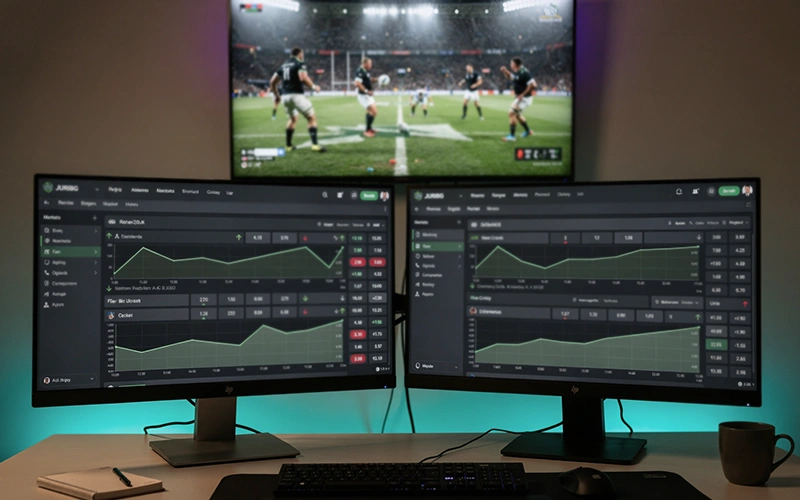
When odds shorten on a particular selection, money is backing it. This could reflect sharp bettors who have identified value, inside information about team news, or simply weight of public money. Distinguishing between these causes matters. Sharp money typically hits markets early and moves lines efficiently. Public money tends to come closer to kick-off and often follows predictable patterns around popular teams.
Lengthening odds suggest money is flowing the other way or that negative news has emerged. An injury announcement, unexpected lineup change, or weather forecast adjustment can all push odds outward. If you planned to back a team and see their odds drifting, investigating why often reveals whether the value has improved or whether something fundamental has changed.
Steam moves occur when odds shift rapidly across multiple bookmakers simultaneously. This usually indicates significant informed betting that the market is scrambling to accommodate. Being positioned before steam moves can capture value, but chasing prices that have already moved often means accepting worse terms than existed moments earlier.
In rugby specifically, odds movement intensifies in the hours before kick-off when team sheets are confirmed. A surprise selection or unexpected omission immediately affects pricing. Bettors who monitor these announcements and understand their implications can sometimes act before bookmakers fully adjust their lines.
Closing line value provides a retrospective measure of whether your bets were sharp. If you consistently bet at better odds than the market offered at kick-off, you are likely identifying genuine value. If your odds tend to drift after you bet them, the market is correcting in your favour. Tracking this metric over many bets reveals whether your betting process is fundamentally sound.
Common Mistakes When Reading Odds
Even experienced bettors fall into traps when interpreting odds. Awareness of these pitfalls helps you avoid costly errors that undermine otherwise sound analysis.
Confusing odds formats leads to miscalculated stakes and unexpected returns. Double-check which format you are viewing before betting, especially when switching between bookmakers. A bet placed thinking you are seeing decimal odds when fractional is displayed can result in completely different exposure than intended.
Ignoring the implied probability leads to backing selections simply because the potential payout looks attractive. Long odds exist for a reason. A 20/1 shot implies roughly a 4.8 percent chance of success. Unless your analysis suggests significantly higher probability, the size of the potential payout does not make it a good bet.
Chasing steam moves after they have happened wastes value. If a selection has shortened from 3.00 to 2.50, the opportunity that sharp bettors identified no longer exists. You are now betting at worse odds while assuming the same probability assessment. Better to identify value independently than follow price movements that have already been captured.
Forgetting to account for bookmaker margin distorts value calculations. When implied probabilities across all outcomes sum to more than 100 percent, the excess represents the bookmaker’s edge. A market showing 104 percent combined probability has a 4 percent overround built in. Recognising this margin helps you understand the true hurdle you face in finding value.
Assuming odds represent truth rather than market opinion leads to passive betting. Bookmakers are skilled at pricing markets efficiently, but they are not omniscient. Your independent analysis might identify factors the market has underweighted or overweighted. Treating odds as one input among many, rather than the final word, opens space for profitable opportunities.
Making Odds Work for You
Understanding odds transforms you from a passive participant into an active evaluator of betting opportunities. Instead of hoping your selection wins, you start thinking about whether the price justifies the risk. This mindset shift makes all the difference between recreational gambling and strategic betting.

Start by choosing one odds format and mastering it completely. Calculate implied probabilities without using a converter. Run return calculations mentally. Once this becomes automatic, you evaluate markets more efficiently and spot value more quickly. Most bettors never reach this level of fluency, which represents an edge in itself.
Compare odds across multiple bookmakers before every bet. The few minutes invested consistently pay dividends over time. Price differences that seem marginal, perhaps 2.80 versus 2.70, compound into significant additional returns across hundreds of wagers. Accepting the first price you see is like paying full retail when discounts are available everywhere.
Keep records that include the odds you bet at and the closing odds at kick-off. This data reveals whether you are finding genuine value or consistently betting into market movements against you. Pattern recognition emerges over time, showing which markets and competitions offer the most opportunity for your particular knowledge base.
Rugby betting offers abundant opportunities for those who understand odds deeply. The sport’s global calendar ensures year-round action across multiple competitions. Different markets, from match betting to handicaps to try scorers, present varied challenges and rewards. Armed with solid odds comprehension, you approach each market ready to assess value rather than simply pick winners.
The numbers always have something to tell you. Learning their language opens doors that remain forever closed to bettors who never bother. Every percentage point of edge you find, every marginally better price you capture, every value bet you identify compounds into results that separate serious bettors from the crowd chasing hope with each punt.
Betting odds explained on rugby betting.
